India Renewable Energy News Update: 300 GW Milestone Reached and What to Watch Toward 500 GW by 2030
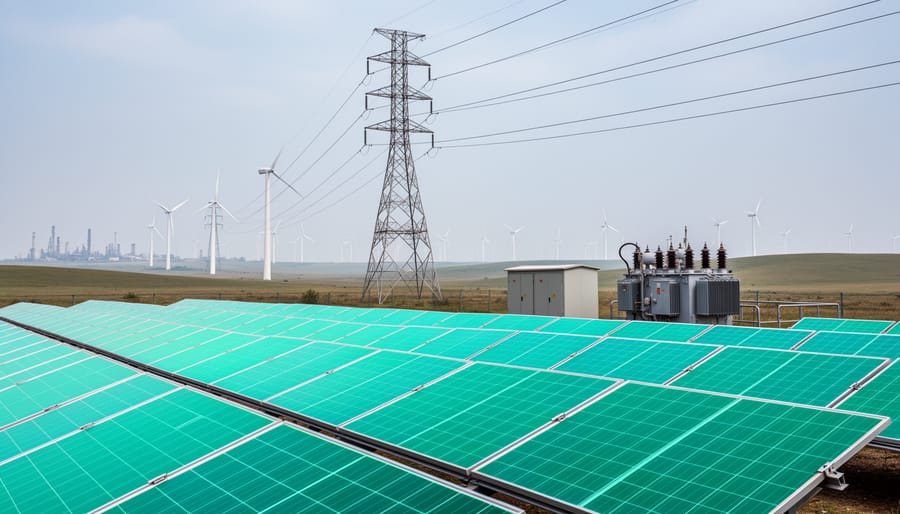
India has officially crossed the 300 GW threshold for non-fossil fuel electricity capacity as of July 31, 2026, marking 60% completion of its ambitious 500 GW target set for 2030. The Ministry of New and Renewable Energy confirmed the country’s installed renewable and nuclear capacity now stands at 300.50 GW, a significant acceleration from previous growth rates that positions India as one of the world’s fastest-expanding clean energy markets.
This milestone arrives at a critical juncture. With four years remaining to add another 200 GW, the pace must intensify considerably. Solar and wind installations have driven the majority of growth to date, but achieving the final 40% will require addressing persistent challenges in grid infrastructure, land acquisition, and financing mechanisms that have historically slowed large-scale deployment.
The strategic implications extend beyond environmental commitments. India’s renewable expansion directly influences energy security, manufacturing competitiveness, and geopolitical positioning in green technology supply chains. For solar industry professionals, the 300 GW achievement validates market trajectory while highlighting bottlenecks that will shape project economics and policy frameworks through the end of the decade. Understanding what enabled this progress and what obstacles remain offers essential context for capital allocation, technology deployment strategies, and regulatory engagement as the sector enters its most demanding phase.
What Changed: India Reaches 300.50 GW Non-Fossil Capacity
India’s Ministry of New and Renewable Energy confirmed on July 31, 2026, that the nation’s non-fossil fuel-based installed electricity generation capacity had reached 300.50 GW, marking a significant waypoint in the country’s ambitious clean energy roadmap. The MNRE statement on 300.50 GW verified the exact figure and timeline, establishing that India has now achieved 60% of its 500 GW non-fossil capacity target set for completion by 2030.
This threshold represents more than a numerical milestone. It demonstrates accelerated deployment momentum in India’s renewable energy sector, particularly when contextualized against the original 2030 target framework established in the wake of the Paris Agreement. The 300 GW crossing point arrives with sufficient runway remaining to meet the 500 GW goal, though it demands sustained annual capacity additions averaging roughly 57 GW through 2030 to bridge the gap. The Ministry’s confirmation anchors what had been anticipated growth projections in verified capacity data, providing a baseline for assessing the feasibility and pacing requirements of the final 200 GW push.
Key Developments Behind the 300 GW Achievement
1. Solar Energy Expansion Driving Capacity Growth
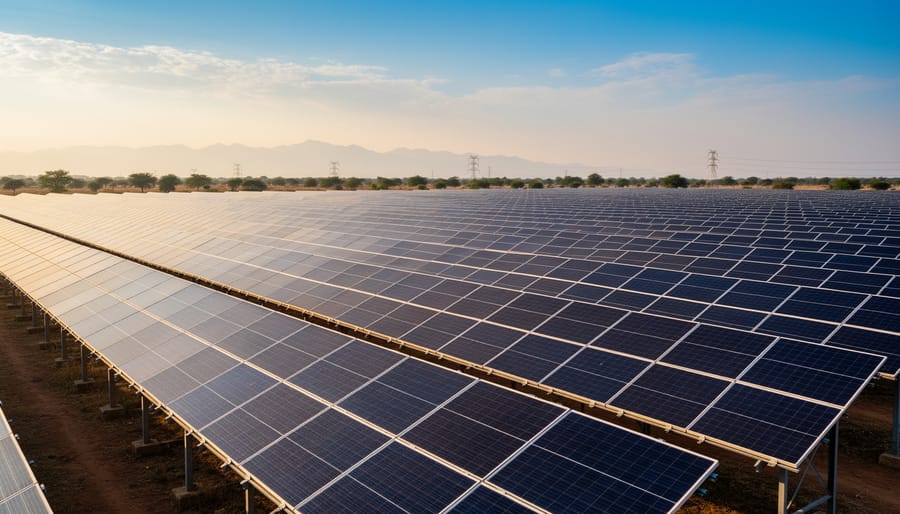
Solar power stands as the dominant driver in India’s achievement of 300.50 GW non-fossil capacity, accounting for the single largest segment of the renewable energy portfolio that pushed the country past this threshold in July 2026. The acceleration in solar deployment over the past five years transformed the energy landscape through both centralized and distributed generation models.
Utility-scale solar parks delivered the bulk of new capacity, with multi-gigawatt installations across Rajasthan, Gujarat, Karnataka, and Madhya Pradesh leveraging economies of scale and competitive auction pricing that drove tariffs below Rs 2 per kilowatt-hour in several projects. These large installations benefited from streamlined land acquisition processes in designated solar zones and improved transmission infrastructure linking high-irradiance regions to demand centers.
Rooftop solar emerged as a complementary growth channel, particularly in the commercial and industrial segments where high daytime electricity rates made distributed generation economically attractive without subsidies. Residential installations gained traction through net metering policies and easier financing mechanisms, though they remain a smaller share of total solar capacity.
Technological advances compressed installation timelines and costs. Bifacial modules, single-axis trackers, and improved inverter efficiency boosted energy yields from the same land footprint. Domestic manufacturing capacity expanded under production-linked incentive schemes, reducing import dependence and supply chain risks while creating a competitive module supply ecosystem that supported rapid project execution. The combination of policy certainty, competitive auctions, and falling technology costs created conditions for solar to scale faster than any other segment in India’s non-fossil capacity mix.
2. Wind Power and Hybrid Projects Contributing to the Mix
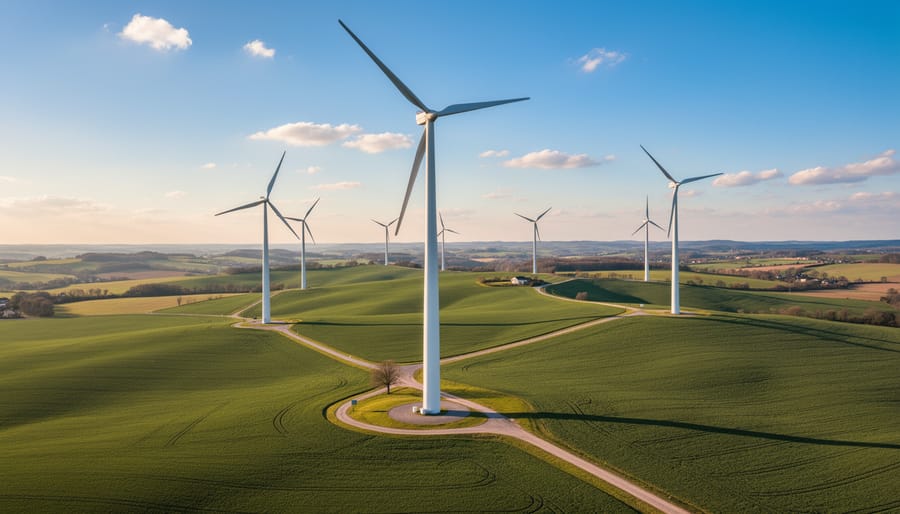
Wind energy remains a cornerstone of India’s renewable capacity expansion, contributing substantial megawatts to the 300 GW milestone alongside solar. Onshore wind installations have steadily grown across the country’s windiest corridors, Gujarat, Tamil Nadu, Karnataka, and Rajasthan, where improved turbine technology and streamlined land-acquisition processes have accelerated deployment. Modern turbines with taller hub heights and longer blades now extract energy more efficiently from India’s moderate wind regimes, making previously marginal sites economically viable.
Offshore wind presents a frontier opportunity. India’s 7,600-kilometer coastline offers significant untapped potential, particularly along the Gujarat and Tamil Nadu coasts. While offshore capacity remains nascent compared to onshore, pilot projects and seabed lease auctions signal growing momentum. The government has identified zones for development and established a framework to attract international expertise in foundation design, installation vessels, and grid-connection infrastructure specific to marine environments.
Hybrid solar-wind projects have emerged as a strategic innovation in India’s non-fossil portfolio. By co-locating wind turbines and solar panels on shared land and transmission infrastructure, these projects achieve higher capacity utilization factors than standalone installations, solar generates during daylight hours while wind often peaks at night and during monsoon seasons. Hybrid configurations reduce land requirements per megawatt, lower per-unit transmission costs, and smooth generation variability, easing grid integration. Dedicated hybrid project auctions and revised technical standards have encouraged developers to pursue this model, positioning hybrids as a key contributor to the remaining 200 GW journey toward 2030.
3. Policy and Investment Framework Supporting Scale-Up
India’s acceleration to 300.50 GW of non-fossil capacity rests on a policy and financial ecosystem designed to unlock investment at scale. The government’s auction-based procurement model, launched in earnest during the mid-2010s, has been central: competitive reverse auctions for large solar and wind projects drove tariffs down while guaranteeing long-term power purchase agreements, giving developers revenue certainty. This mechanism attracted both domestic conglomerates and international renewable energy majors, channeling billions into utility-scale projects across high-irradiance and high-wind zones.
Financial incentives have evolved to address capital intensity. Production-linked incentives for domestic manufacturing of solar modules and cells aim to reduce import dependency and build a local supply chain, while viability gap funding and concessional financing from institutions like the Indian Renewable Energy Development Agency lower the cost of capital for developers. Accelerated depreciation and tax benefits further improve project economics. As solar financing becomes more sophisticated, lenders have grown comfortable underwriting renewable assets, creating deeper debt markets and enabling faster project closure.
Private-sector participation has surged in response. Independent power producers now compete aggressively in auctions, while corporate off-takers increasingly sign direct renewable power agreements to meet sustainability goals. Foreign direct investment flows into renewables have climbed, supported by clearer regulatory frameworks and streamlined approvals. This convergence of policy stability, competitive pricing mechanisms, and accessible capital created the conditions for the rapid capacity additions that carried India past the 300 GW threshold, and will be essential to closing the remaining 200 GW gap by 2030.
Why This Milestone Matters for India’s Energy Transition
The 300 GW milestone represents far more than a numeric achievement; it marks India’s emergence as a credible force in global decarbonization. By reaching 60% of its 500 GW target four years ahead of the 2030 deadline, India demonstrates that large-scale renewable deployment is feasible even in a rapidly industrializing economy with complex grid constraints and diverse geographic challenges. This progress directly supports India’s Nationally Determined Contributions under the Paris Agreement, which commit the country to ensuring that non-fossil sources represent at least 50% of installed electric capacity by 2030.
From an energy security perspective, the capacity build-out reduces India’s vulnerability to volatile global fossil fuel markets and import disruptions. Each gigawatt of solar and wind capacity displaces imported coal and gas, keeping energy expenditure within national borders and improving trade balances. The expansion has also catalyzed domestic manufacturing ecosystems for solar modules, wind turbines, and battery storage systems, creating jobs and building export potential in clean energy technologies.
Grid integration challenges, however, grow more acute as renewable penetration increases. Managing intermittent solar and wind at scale requires substantial investment in transmission infrastructure, grid flexibility mechanisms, and energy storage. The achievement of 300 GW underscores that India has begun solving these technical challenges through auction designs that bundle storage with generation, real-time grid management systems, and inter-state transmission corridors. Successfully navigating the next 200 GW will depend on accelerating these grid modernization efforts while maintaining deployment momentum across solar, wind, and emerging technologies like green hydrogen.
What to Watch: The Path from 300 GW to 500 GW by 2030
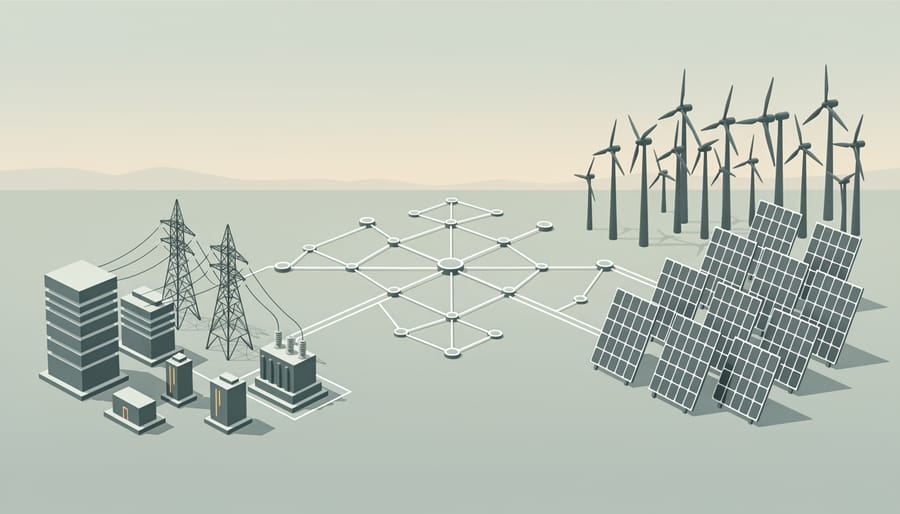
With 300.50 GW now online, India must add roughly 200 GW of non-fossil capacity in the remaining four years to meet its 2030 pledge, an average annual deployment pace of 50 GW, significantly higher than historical rates. Whether this acceleration is achievable hinges on several critical factors that industry observers and policymakers will track closely.
Grid infrastructure remains the most immediate bottleneck. The existing transmission network was designed for centralized thermal generation, not the distributed, variable output of large-scale solar and wind farms. Upgrading inter-state corridors, building dedicated renewable energy zones, and deploying flexible grid-management systems will require massive capital and coordinated action across state utilities. The energy storage role becomes essential here: battery systems can smooth intermittency, defer expensive transmission upgrades, and unlock higher renewable penetration without compromising grid stability.
Financing at scale is another pivotal concern. Meeting the 500 GW target will demand an estimated $150 billion in investment, with much of it needed in the next 36 months. Private capital has responded well to India’s auction-based model, but rising global interest rates, currency risk, and delays in payment from state distribution companies could slow capital inflows. Recent corporate commitments, such as renew storage partnerships that pair generation with battery capacity, signal investor confidence, yet sustained policy predictability and bankable offtake agreements remain non-negotiable.
Key factors to monitor over the next four years include:
- Annual capacity addition rates: whether India sustains 50+ GW per year across solar, wind, and hybrid projects
- Transmission infrastructure development: progress on green energy corridors and inter-state connectivity
- Battery storage deployment: gigawatt-hour-scale rollout to manage intermittency and grid flexibility
- Module manufacturing scale-up: domestic production capacity under PLI schemes to reduce import reliance
- Policy continuity: stability in auction schedules, tariff structures, and land-use frameworks across election cycles
Land availability, particularly for utility-scale solar in high-irradiance states, and manufacturing capacity for modules and inverters under production-linked incentive schemes will also shape the trajectory. If these elements align, India’s 500 GW target is within reach; if one or more falters, the timeline stretches and the momentum gained at 300 GW risks dissipating.
Frequently Asked Questions About India’s Renewable Energy Targets
What counts as non-fossil capacity in India’s 300 GW milestone?
The 300.50 GW figure includes renewable energy sources such as solar, wind, hydro, and biomass, plus nuclear power. Large hydroelectric projects above 25 MW, which were historically categorized separately, are now included in India’s non-fossil capacity reporting to align with international climate commitments.
How does India’s 500 GW target compare to other countries’ renewable goals?
India’s 500 GW target by 2030 ranks among the most ambitious national renewable energy plans globally, particularly when measured against GDP per capita and existing grid infrastructure. China leads in absolute capacity, but India’s growth trajectory reflects a higher deployment rate relative to its baseline energy mix and a compressed timeline for grid modernization.
What role do solar and wind play in reaching 500 GW?
Solar power is expected to contribute roughly 280-300 GW of the 500 GW target, with utility-scale installations forming the bulk alongside distributed rooftop systems. Wind energy, including emerging offshore projects, is projected to add another 140-150 GW, while hybrid solar-wind plants are gaining traction as a strategy to improve capacity utilization and grid stability.
What are the biggest obstacles to achieving 500 GW by 2030?
Grid infrastructure upgrades represent the most critical bottleneck, requiring extensive transmission line construction and energy storage deployment to manage variable renewable output. Additional challenges include securing sufficient land for large-scale projects, sustaining financing flows at the scale needed, and ensuring domestic manufacturing capacity keeps pace with installation targets while maintaining system reliability, particularly for components like inverters where solar inverter lifespan and quality directly affect long-term performance.
The financial requirements for the remaining 200 GW capacity are substantial. Industry estimates suggest India will need approximately $150-180 billion in investment between now and 2030, covering generation assets, grid infrastructure, and storage solutions. While government-backed schemes and competitive auctions have lowered capital costs significantly over the past five years, mobilizing this level of funding will require continued policy certainty, streamlined land acquisition processes, and innovative financing mechanisms to attract both domestic and international capital at scale.
India’s achievement of 300.50 GW non-fossil fuel capacity as of July 31, 2026, marks a decisive step in the country’s energy transformation. Reaching 60% of the 500 GW target four years ahead of the 2030 deadline demonstrates that ambitious renewable deployment at scale is feasible when policy frameworks, investment flows, and technology adoption align effectively.
Yet the remaining 200 GW presents a different challenge than the first 300 GW. Sustaining this pace requires resolving grid integration bottlenecks, accelerating transmission infrastructure buildout, maintaining competitive auction prices amid supply chain pressures, and ensuring land acquisition processes keep pace with project pipelines. Policy continuity and targeted financial mechanisms will determine whether momentum holds or stalls in the final stretch.
The next four years will test India’s institutional capacity to manage the transition from milestone to target. Continued monitoring of quarterly capacity additions, grid stability metrics, private investment trends, and regulatory adjustments will reveal whether 2030’s 500 GW goal remains within reach or requires recalibration. What India accomplishes between now and decade’s end will shape both its domestic energy security and its credibility as a leader in global climate action.