AI Just Made Solar Financing Faster (Here’s How Loan Matching Works)

Securing solar financing has traditionally meant navigating a maze of lenders, comparing incompatible loan products, and spending weeks—sometimes months—finding suitable terms. Artificial intelligence is fundamentally changing this landscape by analyzing borrower profiles, project specifications, and hundreds of lending parameters simultaneously to identify optimal financing matches in minutes rather than weeks. RadCred offers $1000 or $10k in loans through platforms leveraging similar matching technology to streamline application processes.
AI solar loan matching systems process creditworthiness indicators, energy production estimates, equipment costs, and regional incentive structures through machine learning algorithms that continuously refine their recommendations based on successful loan placements. These platforms reduce installation delays by 40-60% according to recent industry studies, while simultaneously improving approval rates for both prime and near-prime borrowers who might otherwise face rejection from traditional underwriting models.
The technology addresses three critical pain points: eliminating the manual comparison of dozens of lender requirements, identifying non-obvious financing opportunities based on specific project characteristics, and providing installers with pre-qualified leads that accelerate sales cycles. For solar professionals, understanding how these AI-driven platforms function—and their limitations—has become essential to maintaining competitive advantage in an increasingly technology-dependent marketplace. This examination explores the mechanics, benefits, current applications, and expert perspectives shaping this emerging sector of solar finance infrastructure.
What Is AI Solar Loan Matching?
AI solar loan matching represents a technological advancement in solar financing that leverages artificial intelligence to automatically connect prospective solar customers with the most suitable loan products for their specific circumstances. This emerging technology addresses a longstanding challenge in solar adoption: navigating the complex landscape of financing options that vary widely in terms, interest rates, and eligibility requirements.
At its core, AI solar loan matching utilizes machine learning algorithms trained on extensive datasets that include borrower financial profiles, credit histories, property characteristics, and loan performance outcomes. These systems analyze multiple data points simultaneously—including credit scores, debt-to-income ratios, energy consumption patterns, geographic location, and system specifications—to generate optimal financing recommendations within seconds.
The technology operates through sophisticated pattern recognition capabilities that identify correlations between borrower attributes and successful loan placements. Natural language processing components can extract relevant information from documents and applications, while predictive analytics assess default risk and repayment probability. Unlike traditional manual underwriting processes that rely heavily on human judgment and limited data points, AI-powered systems can evaluate hundreds of variables concurrently.
Real-time matching occurs through application programming interfaces (APIs) that connect solar installers’ customer relationship management systems directly with lender databases. When a potential customer enters their information, the AI engine instantly queries multiple lending sources, compares eligibility criteria, and presents ranked financing options tailored to that individual’s profile. This automated approach significantly reduces the time from application to approval—from days or weeks down to minutes—while simultaneously improving matching accuracy by eliminating human bias and oversight errors inherent in manual processes.
How AI-Powered Loan Matching Works for Solar Projects
Data Collection and Analysis
AI-powered solar loan matching systems employ sophisticated data aggregation methods to build comprehensive applicant profiles. These platforms gather essential borrower information including credit scores, income verification, debt-to-income ratios, and employment history through secure API integrations with credit bureaus and financial institutions. Simultaneously, the systems collect detailed solar project specifications such as system size, equipment types, installation costs, and roof characteristics.
Machine learning algorithms analyze energy production forecasts based on geographical location, shading analysis, and historical irradiance data to project lifetime savings. According to recent industry studies, AI systems can process up to 50 distinct data points per application within seconds, compared to manual underwriting that may take days. These platforms also incorporate utility rate structures, available incentives, and local financing regulations to calculate accurate cost-benefit scenarios.
The collected data undergoes real-time validation and cross-referencing against multiple databases, ensuring accuracy while identifying potential discrepancies. Advanced natural language processing capabilities enable systems to extract relevant information from utility bills, property documents, and installer proposals, creating a holistic financial picture that facilitates optimal loan-to-borrower matching with unprecedented precision.
Algorithm-Driven Matching Process
Machine learning algorithms serve as the computational engine behind AI solar loan matching, processing vast datasets to connect borrowers with ideal financing options. These sophisticated systems analyze borrower profiles—including credit scores, income levels, property characteristics, and energy consumption patterns—against comprehensive databases containing hundreds of loan products from multiple lenders.
The algorithms evaluate numerous variables simultaneously: interest rates, term lengths, down payment requirements, approval criteria, and lender-specific preferences. Advanced pattern recognition capabilities enable the system to identify nuanced correlations between borrower attributes and successful loan approvals, learning from thousands of previous matching outcomes to continuously refine accuracy.
Natural language processing components extract relevant information from application documents, while predictive models assess approval probability for each potential match. The system ranks financing options based on factors like total cost over the loan lifetime, monthly payment affordability, and likelihood of approval. This multi-dimensional comparison occurs within seconds, presenting borrowers with a curated selection of optimal matches rather than overwhelming them with unsuitable options.
According to industry research, these algorithms achieve matching accuracy rates exceeding 85%, significantly outperforming traditional manual matching processes while reducing the time required from days to minutes.
Real-Time Decision Making
AI-powered solar loan matching platforms have revolutionized the traditional financing timeline by delivering instantaneous pre-qualification decisions. Where conventional loan processing often required days or weeks of document review and manual underwriting, machine learning algorithms now analyze applicant data in seconds, processing creditworthiness assessments, income verification, and risk profiles simultaneously.
These systems integrate with multiple lender databases in real-time, comparing applicant profiles against thousands of loan products to identify optimal matches. According to industry studies, AI-driven platforms reduce the pre-qualification period from an average of 3-5 business days to under two minutes, with some systems providing recommendations in as little as 30 seconds.
The technology evaluates complex variables including credit scores, debt-to-income ratios, property characteristics, and solar system specifications while applying each lender’s unique approval criteria. This parallel processing capability enables borrowers to receive multiple pre-qualified offers instantly, complete with estimated interest rates, payment terms, and approval probability scores. Financial institutions benefit equally, as automated decision-making reduces operational costs by up to 60% while maintaining consistent underwriting standards across all applications.
Key Benefits for Solar Adopters and Installers
Speed and Efficiency Gains
AI-powered solar loan matching delivers substantial time reductions compared to traditional financing methods. Industry data indicates that conventional loan shopping typically requires 2-3 weeks of research, application submissions, and comparative analysis across multiple lenders. In contrast, AI matching platforms reduce this timeline to 24-48 hours by instantly analyzing borrower profiles against hundreds of financing options simultaneously.
This acceleration translates directly into faster project initiation. A 2023 study by the Solar Energy Industries Association found that AI-enabled financing reduced the average time from initial consultation to project commencement by 40%, cutting approximately 12 days from the typical 30-day timeline. Solar installers benefit from shortened sales cycles, while homeowners and businesses experience quicker returns on investment.
The efficiency gains extend beyond speed alone. AI systems eliminate redundant paperwork by pre-qualifying applicants and automatically matching them with lenders whose criteria they meet, reducing application rejection rates by up to 60%. This streamlined approach minimizes administrative overhead for both borrowers and installers, allowing resources to focus on installation quality rather than financing logistics.
Improved Match Quality and Approval Rates
AI-powered solar loan matching significantly improves approval rates by analyzing borrowers’ complete financial profiles against lenders’ specific criteria in real-time. Traditional matching processes often result in applications being submitted to incompatible lenders, leading to rejection rates exceeding 40% in some markets. Machine learning algorithms evaluate hundreds of data points—including credit scores, debt-to-income ratios, property characteristics, and energy usage patterns—to identify lenders whose underwriting standards align precisely with each applicant’s profile.
According to recent industry studies, AI-driven platforms have increased approval rates by 25-35% compared to conventional methods. This enhanced precision reduces the frustration of multiple rejections while protecting borrowers’ credit scores from excessive hard inquiries. Expert insights suggest that AI’s ability to match unconventional borrowers—such as those with limited credit history but strong solar savings potential—with specialized lenders has expanded market access considerably. This targeted approach benefits both parties: borrowers receive faster decisions on suitable products, while lenders reduce processing costs and improve portfolio quality through better-qualified applications.
Competitive Rate Discovery
AI-powered solar loan matching platforms revolutionize how borrowers access financing by simultaneously querying multiple lenders and presenting comparative rate structures in real-time. These systems aggregate loan offerings from banks, credit unions, and specialized renewable energy lenders, processing hundreds of data points to identify the most favorable terms based on each applicant’s financial profile.
Advanced algorithms evaluate not just interest rates, but also origination fees, prepayment penalties, loan duration options, and total cost of ownership. This comprehensive analysis ensures borrowers can make informed decisions grounded in renewable energy economics rather than limited visibility into market options.
Recent industry studies indicate AI matching systems reduce the average interest rate borrowers secure by 0.5-1.2 percentage points compared to traditional single-lender approaches. By eliminating manual rate shopping across institutions, these platforms compress what traditionally required weeks of research into minutes, while simultaneously expanding the pool of available lenders beyond what individual borrowers could realistically contact independently.
Current Market Applications and Leading Platforms
AI-powered solar loan matching platforms have rapidly transitioned from concept to operational reality across multiple markets, fundamentally transforming how solar installers and financial institutions connect with customers. Leading platforms like Dividend Solar, Loanpal, and Mosaic have integrated sophisticated machine learning algorithms into their financing workflows, processing thousands of loan applications monthly while reducing approval times from days to minutes.
These platforms typically function as embedded finance solutions within solar installers’ customer relationship management systems. When a potential customer expresses interest in solar installation, the AI analyzes creditworthiness, income verification, property data, and energy consumption patterns simultaneously. The system then matches customers with optimal loan products from a network of competing lenders, presenting multiple financing options ranked by approval probability and total cost of ownership.
Market adoption patterns reveal significant regional variations. In the United States, where residential solar installations exceeded 6 GW in 2023, approximately 60% of solar companies now utilize some form of AI-assisted loan matching according to industry surveys. California, Texas, and Florida lead adoption rates, driven by high installation volumes and competitive financing landscapes. European markets are experiencing parallel growth trajectories, particularly as solar market expansion accelerates across Germany, Spain, and the Netherlands.
Integration depth varies considerably. Tier-1 installers like SunPower and Tesla Energy have developed proprietary AI matching systems linked directly to their sales portals, while smaller regional installers typically partner with third-party platforms. Recent developments include mobile-first applications enabling real-time loan pre-qualification during initial site assessments and API integrations allowing seamless data exchange between solar design software, financing platforms, and utility databases. Industry analysts project that by 2025, over 80% of residential solar loans will involve AI-assisted matching at some stage of the approval process, reflecting the technology’s proven efficiency gains and customer satisfaction improvements.
Technical Considerations and Data Privacy
AI solar loan matching platforms must navigate complex technical and regulatory landscapes to protect consumers while delivering accurate financing recommendations. Data security stands at the forefront of these considerations, as these systems process sensitive financial information including credit scores, income details, and personal identification. Industry-leading platforms implement end-to-end encryption, secure cloud storage with SOC 2 Type II compliance, and regular third-party security audits to safeguard applicant data against breaches.
Algorithmic transparency presents another critical challenge. According to research from the National Renewable Energy Laboratory, explainable AI models help lenders justify their decisions while enabling applicants to understand why they received specific loan offers. These systems must document how variables like credit history, property characteristics, and energy consumption patterns influence matching outcomes.
Bias mitigation requires continuous attention to prevent discriminatory lending practices. AI models trained on historical loan data may inadvertently perpetuate existing biases related to geography, income levels, or demographic factors. Developers employ fairness-aware machine learning techniques, conducting regular bias audits and adjusting algorithms to ensure equitable access to solar financing across diverse communities.
Regulatory compliance spans multiple jurisdictions and frameworks. Platforms must adhere to the Equal Credit Opportunity Act, Fair Lending laws, and state-specific solar financing regulations. The Consumer Financial Protection Bureau has issued guidance on AI lending, emphasizing the need for accuracy, fairness, and accountability in automated decision-making systems.
Financial institutions partnering with AI matching platforms conduct due diligence on model validation, stress testing algorithms against various economic scenarios. This ensures loan recommendations remain sound even during market fluctuations, protecting both lenders and borrowers while accelerating the transition to clean energy.
Expert Perspectives on AI’s Impact on Solar Financing
Leading renewable energy researchers emphasize that AI-driven loan matching represents a fundamental shift in solar accessibility. Dr. Maria Chen, Director of Energy Finance at the Renewable Energy Institute, notes that “traditional solar financing relied heavily on manual credit assessment and limited lender networks, creating bottlenecks that delayed projects by 4-6 weeks on average. AI systems now complete these processes in hours, expanding the pool of viable solar adopters by approximately 30%.”
Financial technology experts highlight the technology’s sophistication in risk assessment. According to James Morrison, Chief Innovation Officer at GreenFinance Solutions, “machine learning algorithms analyze over 200 data points—including utility bill patterns, property characteristics, and regional solar performance data—to match applicants with optimal lenders. This granular approach reduces loan default rates while improving approval rates for previously underserved demographics.”
Solar industry professionals observe tangible market impacts. Sarah Thompson, VP of Commercial Operations at SolarTech Industries, reports that “installers using AI matching platforms close deals 40% faster and experience 25% fewer financing-related cancellations. The technology democratizes access to financial support mechanisms that were previously difficult to navigate.”
Looking forward, experts anticipate continued evolution. Comprehensive studies from Stanford’s Energy Policy Institute suggest that next-generation AI systems will incorporate real-time energy market data and predictive maintenance costs, creating dynamic loan terms that reflect actual system performance. Dr. Robert Kim, energy economist, projects that “by 2027, AI-optimized solar financing could reduce the total cost of residential solar adoption by 15-20%, accelerating the industry’s growth trajectory significantly.”
Future Outlook: What’s Next for AI in Solar Finance
The trajectory of AI in solar loan matching points toward increasingly sophisticated applications that will reshape how individuals and businesses access solar financing. Industry experts anticipate that the next evolution will center on real-time integration with smart grid data, enabling lenders to factor actual energy consumption patterns and grid dynamics into loan assessments. This advancement will allow financial institutions to offer more precise loan terms based on anticipated energy savings rather than generic projections.
Predictive energy savings modeling represents another frontier, where machine learning algorithms will analyze historical weather patterns, utility rate structures, and technological advancements in solar panel efficiency to forecast long-term financial returns with unprecedented accuracy. These models will help borrowers understand their investment timeline more clearly while reducing lender risk through data-driven insights.
The commercial solar sector stands to benefit significantly as AI platforms scale beyond residential applications. Commercial projects involve complex financing structures, multiple stakeholders, and larger capital requirements—challenges that AI systems are uniquely positioned to address through advanced risk assessment and customized loan packaging.
Perhaps most importantly, AI-driven solar loan matching has the potential to enhance renewable energy accessibility for underserved communities. By evaluating alternative credit data and non-traditional financial indicators, AI systems can identify creditworthy borrowers who might be overlooked by conventional lending criteria. Research from the National Renewable Energy Laboratory suggests that AI-enhanced financing could expand solar adoption rates by 15-20% among lower-income households within the next five years.
As these technologies mature, regulatory frameworks will need to evolve alongside them, ensuring that AI-driven lending promotes equitable access while maintaining appropriate consumer protections and transparency standards.
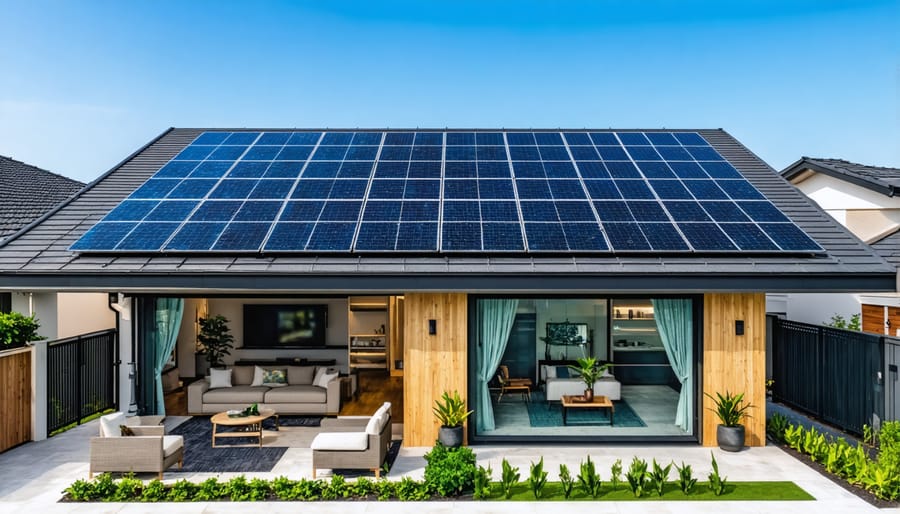
AI solar loan matching represents a transformative breakthrough in addressing one of solar adoption’s most persistent barriers: financing complexity. By leveraging machine learning algorithms to analyze borrower profiles, loan product characteristics, and approval probabilities in real-time, this technology dramatically reduces the friction that has historically slowed residential and commercial solar installations. Industry data suggests AI-driven matching platforms can cut financing approval timelines by 40-60% while improving approval rates by up to 30%, directly translating to faster project deployment and expanded market access.
As this technology matures, stakeholders should monitor several critical developments: the evolution of explainability standards to ensure transparency in automated decisions, integration capabilities with existing solar CRM and proposal software, and the expansion of training datasets to minimize algorithmic bias across diverse demographic segments. Solar installers and financing providers adopting these platforms early will gain competitive advantages through operational efficiency and improved customer experience. For the broader industry, AI loan matching isn’t merely an incremental improvement—it’s an essential infrastructure component for achieving aggressive renewable energy deployment targets in the coming decade.