What Is Photovoltaic Lifetime (and How Long Do Solar Panels Last)?
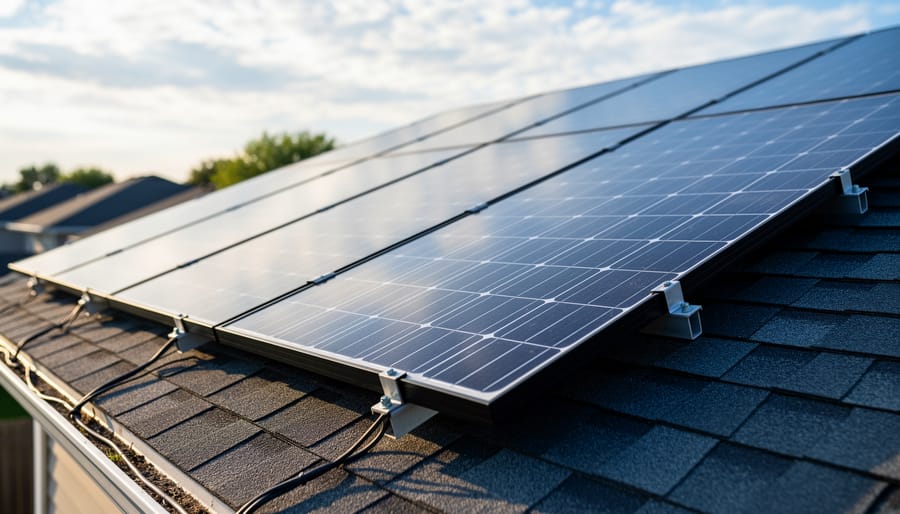
Photovoltaic lifetime refers to the operational lifespan during which solar panels generate electricity at economically viable efficiency levels, typically spanning 25 to 30 years for modern crystalline silicon modules, though many systems continue producing power well beyond their warranted period.
Understanding how long solar panels last has become critical as the global installed capacity surpasses 1,500 gigawatts and early installations approach end-of-life decisions. The longevity of photovoltaic systems directly impacts return on investment, levelized cost of energy, and the environmental footprint of solar power. A panel that degrades faster than expected can transform a profitable installation into a financial burden, while modules that exceed performance projections validate solar’s position as a reliable baseload contributor.
Degradation doesn’t mean sudden failure. Field studies from systems installed in the 1980s reveal that quality panels lose approximately 0.5% to 0.8% of their output capacity annually, a rate that varies significantly based on technology type, climate conditions, and manufacturing quality. Some thin-film technologies degrade faster in humid environments, while bifacial modules demonstrate improved resilience in certain applications. The distinction between warranted lifetime and actual service life matters because manufacturers guarantee 80% to 85% of original power output at 25 years, yet real-world data shows many panels operating effectively at 40 years or more.
This article examines the mechanisms driving photovoltaic degradation, compares longevity across different solar technologies, and provides evidence-based guidance for maximizing system lifetime through proper installation and maintenance practices.
What Photovoltaic Lifetime Means
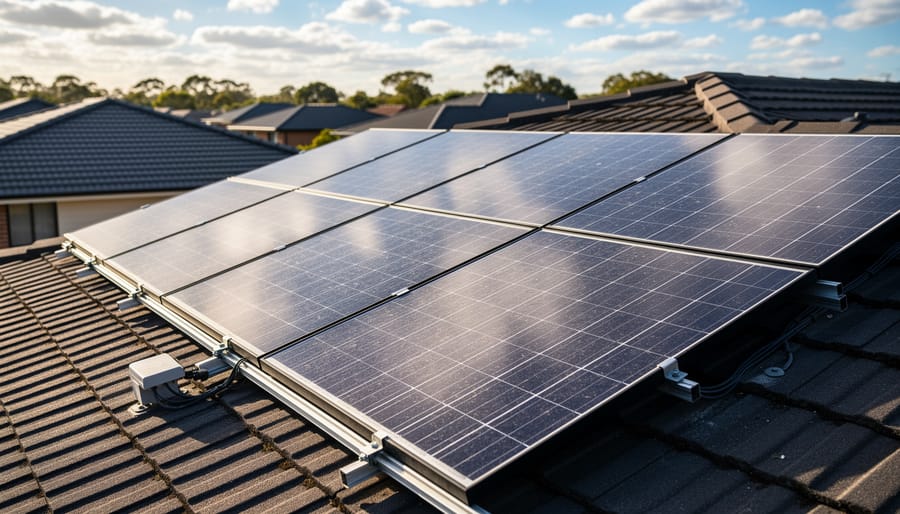
Photovoltaic lifetime refers to the period during which a solar panel continues to generate electricity at acceptable performance levels, but this seemingly simple concept actually encompasses three distinct measurements that matter to panel owners and investors.
The first measurement is physical lifespan, how long the panel physically exists and produces any power at all. Most quality panels remain structurally intact and functional for 35 to 50 years or longer, far exceeding their official ratings. The second is the warranty period, typically 25 to 30 years, during which manufacturers guarantee the panel will maintain a minimum performance threshold, usually 80-85% of its original output. The third is the degradation rate, expressed as a percentage per year, which describes how quickly the panel loses efficiency over time.
Understanding these distinctions matters because solar panel lifespan extends well beyond warranty coverage. Industry standards for measuring longevity center on annual degradation, with the median rate for modern panels hovering around 0.5% per year. This means a panel operating at 100% capacity in year one performs at roughly 87.5% capacity after 25 years, still well above the typical 80% warranty threshold.
- Degradation rate
- The annual percentage decline in a panel’s power output, typically 0.3-0.8% per year for quality modules. This metric predicts long-term performance more accurately than warranty periods alone.
- Useful life
- The operational period during which a panel generates economically viable electricity, often extending 10-20 years beyond the warranty period. Panels continue producing power at reduced but still substantial efficiency levels.
- Warranty period
- The manufacturer-guaranteed timeframe (usually 25-30 years) during which the panel will maintain specified performance levels, typically 80-85% of original capacity.
- End-of-life threshold
- The performance level at which a panel is considered no longer viable, commonly set at 80% of nameplate capacity. This threshold is somewhat arbitrary, as panels functioning below this level still generate usable power.
- Nameplate capacity
- The manufacturer’s rated power output under standard test conditions, measured in watts. Actual field performance varies based on installation conditions and environmental factors.
The 25-30 year warranty baseline represents a conservative industry standard rather than an actual expiration date. Field data consistently shows panels operating productively decades beyond these periods, making photovoltaic systems among the most durable energy technologies available.
How Photovoltaic Degradation Works
Initial Degradation vs. Long-Term Decline
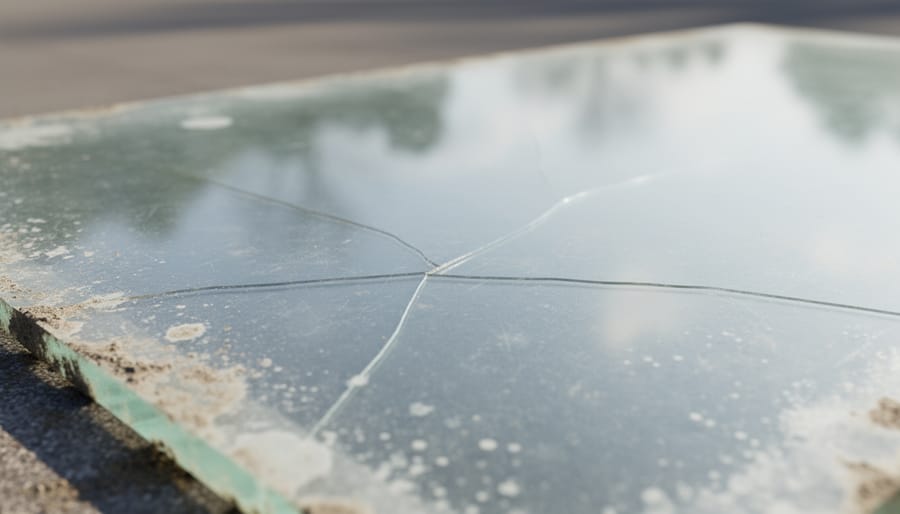
Solar panels experience a two-phase degradation pattern that’s distinct from how most electronics age. When panels first start operating, they undergo what’s called light-induced degradation (LID), a natural process related to how solar panels work at the molecular level. During the first few weeks to months, power output typically drops 1-3%, as boron-oxygen complexes form within the silicon crystalline structure and stabilize. This initial burn-in is expected and factored into manufacturer warranties.
After this first-year decline, panels enter a steady-state degradation phase with much slower decline rates. Research from a comprehensive early-life module degradation study shows that quality panels then degrade at approximately 0.5-0.7% per year under normal conditions. This means a panel producing 300 watts initially might generate around 285 watts after 10 years and 270 watts after 20 years. The key distinction matters for financial modeling: buyers should calculate returns using post-stabilization performance, not the initial nameplate rating, to avoid overestimating long-term energy production.
Environmental and Installation Factors
Climate conditions exert considerable influence on panel degradation rates. High temperatures accelerate chemical reactions within photovoltaic cells, increasing degradation by approximately 0.5-1% annually in hot desert climates compared to 0.3-0.5% in temperate regions. Humidity compounds thermal stress, moisture penetration through module edges and junction boxes catalyzes corrosion of electrical connections and delamination of encapsulant layers. Coastal installations face additional challenges from salt-laden air, which corrodes aluminum frames and mounting hardware while degrading anti-reflective coatings.
UV intensity varies significantly with latitude and altitude. Panels installed at high elevations or near the equator experience more aggressive photodegradation of backsheet materials and encapsulants. Snow loading in northern climates creates mechanical stress through freeze-thaw cycles, while hail in storm-prone regions risks microcracks even when modules pass impact certification tests.
Installation quality determines whether panels achieve their rated lifetime. Poor roof mounting that allows flexing introduces stress fractures in cells. Inadequate ventilation behind modules traps heat, elevating operating temperatures by 10-15 degrees Celsius and accelerating degradation. Electrical connections made without proper torque specifications develop high-resistance joints that generate localized heating and premature failures.
Geographic considerations extend beyond weather. Airborne particulates in industrial or agricultural areas accumulate on panel surfaces, reducing output and causing hotspots that degrade cells faster. Proper system design accounts for these regional factors through appropriate mounting clearances, ventilation strategies, and material selection.
Types of Photovoltaic Technologies and Their Lifespans
Different photovoltaic technologies degrade at varying rates, with design choices and manufacturing quality producing distinct lifetime expectations across product categories. Understanding these differences helps match the right panel type to specific applications and budget considerations.
Monocrystalline silicon panels represent the current longevity standard, with manufacturers routinely offering 25-year performance warranties and actual operational lifespans extending 30 to 40 years. These panels typically degrade at 0.3% to 0.5% annually after the first year, meaning a quality monocrystalline module retains approximately 90% of its original capacity after 25 years. The single-crystal structure resists degradation mechanisms more effectively than alternatives, and field data from installations dating to the 1980s demonstrates operational viability beyond four decades in many cases.
Polycrystalline silicon panels historically degraded slightly faster than monocrystalline versions, with annual rates near 0.6% to 0.8%, though manufacturing improvements in recent years have narrowed this gap substantially. Many polycrystalline products now carry comparable 25-year warranties and achieve similar real-world longevity. The multi-crystal grain boundaries create additional sites for potential degradation, but proper encapsulation and quality backsheets mitigate much of this vulnerability.
Thin-film technologies show greater variation in lifetime performance depending on specific chemistry. Cadmium telluride panels typically degrade at 0.5% to 0.75% annually, with 25-year warranties becoming standard as manufacturing maturity improves. Copper indium gallium selenide thin-film modules demonstrate degradation rates similar to crystalline silicon when properly manufactured. Amorphous silicon thin-film degrades faster, at roughly 0.8% to 1.2% per year, making it less suitable for applications requiring multi-decade operation.
Bifacial panels, which capture light from both sides, use monocrystalline or polycrystalline cells and inherit the lifetime characteristics of their underlying technology. The dual-glass construction common in bifacial designs can actually improve durability by eliminating polymer backsheets vulnerable to moisture and UV damage.
Emerging perovskite technologies remain in development, with current prototypes showing stability issues that limit field lifetime to months or single-digit years. Research focuses intensely on encapsulation methods and material modifications to extend operational life, but perovskite panels lack the decades of field validation that crystalline silicon enjoys.
Technology selection involves balancing upfront cost, efficiency, and expected lifetime against project requirements. Commercial installations prioritizing maximum return over 25-plus years typically specify monocrystalline panels, while applications with shorter planning horizons may accept slightly higher degradation rates in exchange for lower initial investment.
Real-World Performance and Field Studies
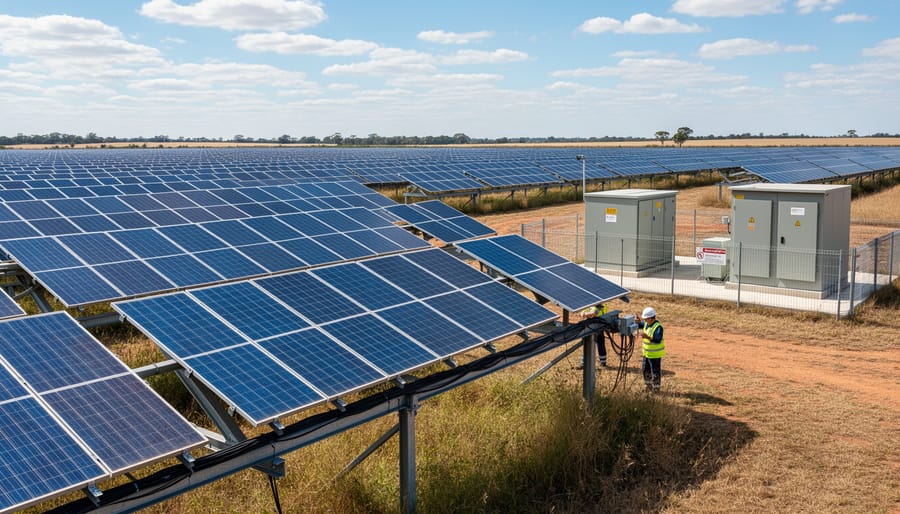
Laboratory tests can tell you what a solar panel should do. Field studies show you what it actually does over decades of real-world exposure. These long-term monitoring programs provide the most reliable data on photovoltaic lifetime, and the results are consistently encouraging.
The longest-running field studies come from installations in the 1980s and early 1990s that remain operational today. Research teams at institutions like the National Renewable Energy Laboratory (NREL) have tracked panels for over 40 years in some cases. These vintage systems demonstrate median degradation rates between 0.5% and 0.8% per year, meaning panels that started at 100% efficiency now operate at 70-80% capacity after four decades. Many continue generating useful power well beyond their original design life.
More recent comprehensive studies paint an even better picture. NREL’s 2016 meta-analysis of degradation rates, which examined thousands of systems worldwide, found that modern panels degrade at a median rate of just 0.5% annually. Higher-quality monocrystalline modules often perform better, with premium manufacturers demonstrating rates as low as 0.3% per year in controlled monitoring programs.
Geographic and climate-specific studies reveal important nuances. Desert installations in Arizona and the Middle East show slightly higher degradation due to extreme heat and UV exposure, while temperate climates generally see slower decline. Coastal systems face moisture-related challenges, yet well-sealed panels in these environments still regularly exceed 30-year operational lives.
Industry monitoring programs from major utilities and solar operators track thousands of installations continuously. These datasets confirm that catastrophic failures are rare. Most performance loss comes from gradual, predictable degradation rather than sudden failure. The data also shows that installation quality matters as much as panel quality, properly mounted, well-ventilated systems consistently outlast poorly installed counterparts regardless of module brand.
This accumulated evidence demonstrates that photovoltaic lifetime predictions are conservative. Panels routinely operate productively decades beyond warranty periods.
Applications and Why Lifetime Matters
Panel lifetime projections fundamentally shape system economics across every deployment scale. A residential homeowner evaluating a 25-year warranty calculates payback periods against electricity costs, whereas a utility-scale developer models cash flows spanning three decades to secure project financing. Each application weighs degradation rates differently based on operational constraints and revenue expectations.
For residential installations, lifetime directly determines whether a system pays itself off before requiring major component upgrades. Homeowners typically see 6-12 year payback periods in high-sunshine regions, but panels producing 80% of rated output at year 25 still generate meaningful savings for another decade. The calculation shifts dramatically when factoring in inverter replacement at years 10-15, which adds $2,000-$5,000 to total ownership costs.
Commercial systems face tighter financial scrutiny. Corporate buyers model levelized cost of energy to compare solar against grid power, where even a 0.1% difference in annual degradation can shift investment decisions. A warehouse operator planning 20-year energy budgets needs certainty that panels won’t degrade faster than projected, as underperformance erodes savings that justify the capital outlay.
Utility-scale farms structure power purchase agreements around conservative lifetime estimates. A 1-gigawatt facility degrading at 0.7% annually produces vastly different revenue in year 30 than one degrading at 0.3%, affecting debt service coverage and investor returns. Operators build degradation monitoring into asset management, replacing underperforming sections before they compromise contractual obligations.
Off-grid applications treat lifetime as reliability insurance. Remote telecommunications stations or rural electrification projects can’t afford unexpected failures, so they often oversize systems and replace panels preemptively. These installations value predictable performance over maximum efficiency, sometimes specifying more durable technologies despite lower initial output.
Several factors shaped by photovoltaic lifetime drive project viability:
- Investment payback periods that determine financing eligibility
- Total cost of ownership including replacement components and maintenance
- Energy production forecasts used in power purchase agreements
- Warranty claim thresholds that trigger manufacturer obligations
- System financing terms tied to expected revenue streams over 20-30 years
Emerging hybrid systems add complexity. Pairing solar with storage means coordinating panel longevity against battery replacement cycles, typically 10-15 years for lithium-ion systems, and in specialized installations like sand battery lifespan projections exceeding 30 years. Mismatched component lifetimes force operators to plan multiple upgrade cycles, complicating financial models and maintenance scheduling.
Extending Photovoltaic System Lifespan
While solar panels degrade naturally, strategic maintenance and monitoring can significantly extend their operational life, often well beyond the standard 25-year warranty period.
Cleaning and Physical Maintenance
Dust, pollen, bird droppings, and other debris reduce light absorption and accelerate degradation through localized heating. In most climates, rain provides adequate cleaning, but installations in arid regions or near pollution sources benefit from manual cleaning two to four times annually. Use deionized water and soft brushes; harsh chemicals and abrasive materials can damage anti-reflective coatings. Check for physical damage, loose mounting hardware, and vegetation shading during each cleaning cycle.
Inverter and Electrical System Care
Inverters typically last 10-15 years, significantly shorter than panels themselves. Budget for one or two inverter replacements over a system’s lifetime. Monitor inverter performance logs for efficiency drops that signal impending failure, and address solar inverter failing symptoms early to avoid system downtime. Inspect electrical connections annually for corrosion, especially in coastal installations where salt exposure accelerates deterioration. Torque connections to manufacturer specifications; loose terminals create resistance that generates heat and degrades components.
Proactive Degradation Monitoring
Modern monitoring systems track individual panel output, making it possible to identify underperforming modules before they affect overall system yield. Compare actual production against expected output based on irradiance data. A degradation rate exceeding 0.5-0.7% annually warrants investigation. String-level monitoring can pinpoint failing panels within an array, while module-level optimizers provide even finer resolution.
Shading management matters throughout a system’s life. Trees grow, buildings appear, and seasonal sun angles change. Reassess shading patterns every few years and trim vegetation as needed to maintain optimal exposure.
Frequently Asked Questions
Do solar panels really last longer than their 25-year warranty?
Yes, most quality panels continue operating well beyond their warranty period, often 30-40 years or more. The warranty guarantees a minimum performance threshold (typically 80-85% of original capacity), but panels don’t stop working when warranties expire, they just degrade gradually.
How can I tell if my panels are failing prematurely?
Monitor for sudden drops in energy production compared to similar weather conditions, visible discoloration or delamination of the front surface, and hotspots detected through thermal imaging. Consistent performance monitoring against baseline expectations reveals degradation patterns that exceed normal rates.
Is it worth replacing older panels with newer, more efficient models?
It depends on your current system’s performance and financial goals. If your panels are still producing 75-80% of their original output and your energy needs haven’t changed significantly, replacement rarely makes financial sense given the embodied energy and cost of new equipment. However, if you need more capacity in limited roof space or your panels show severe degradation, upgrading can be worthwhile.
What happens to solar panels at end of life?
Modern recycling facilities can recover 95% or more of panel materials, including silicon, glass, aluminum frames, and valuable metals like silver and copper. Many manufacturers now participate in take-back programs, though recycling infrastructure varies by region.
Understanding these practical considerations helps you make informed decisions about system maintenance, performance expectations, and long-term planning. Most panels far outlive their warranties when properly installed and maintained, making solar a durable investment even as technology continues improving.
Understanding photovoltaic lifetime is fundamental to making informed decisions in solar energy investment and system design. Quality panels from reputable manufacturers routinely exceed their 25-30 year warranty periods, with many installations from the 1980s still generating power today at acceptable efficiency levels. The evidence from field studies confirms that degradation rates have improved significantly with modern manufacturing processes, making today’s panels more durable than ever.
Proper installation and proactive maintenance directly influence how long your system delivers value. Avoiding common installation errors, monitoring performance trends, and addressing minor issues before they escalate can add years to effective operation and substantially improve return on investment. The levelized cost of energy calculation becomes increasingly favorable when panels maintain output for 30, 35, or even 40 years.
Looking ahead, emerging monitoring technologies promise earlier detection of degradation patterns, while material science advances continue pushing the boundaries of panel durability. Bifacial designs, improved encapsulation materials, and better understanding of degradation mechanisms suggest that panels installed in 2026 may routinely operate efficiently well into the 2060s. For solar energy stakeholders, this trajectory reinforces the case for quality equipment and professional installation practices.