What Is the Lifespan of a Solar Panel (and How Does It Work)?
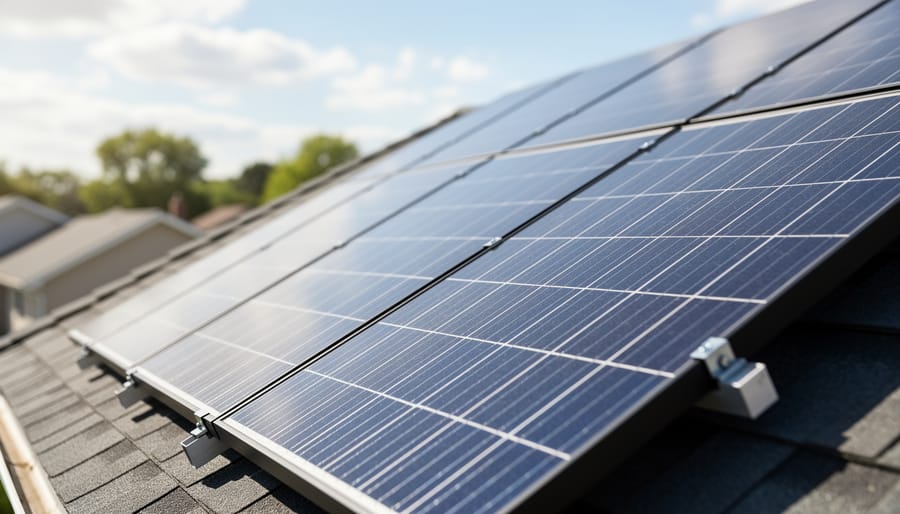
A solar panel’s lifespan typically ranges from 25 to 30 years, though many modules continue generating electricity well beyond three decades with gradually diminishing output. This durability stems from the solid-state nature of photovoltaic technology, which has no moving parts to wear out, but performance does decline at an average rate of 0.5% to 0.8% annually due to material degradation from UV exposure, thermal cycling, and environmental stress.
Understanding solar panel longevity matters because these modules represent the largest upfront cost in a photovoltaic system and directly determine return on investment. A residential installation costing $15,000 to $25,000 demands accurate lifespan projections for financial planning, while commercial operators managing megawatt-scale arrays need degradation data to forecast decades of energy production and schedule replacements. The practical question isn’t simply how long panels last, but how their declining efficiency affects energy yield over time and when performance drops below economically viable thresholds.
Solar panels outlast most other system components by significant margins. While modules retain 80% or more of their original capacity after 25 years, inverters typically require replacement every 10 to 15 years, and mounting hardware may need attention within two decades depending on installation quality and local climate conditions. This disparity in component lifespans shapes maintenance strategies and lifecycle cost analysis.
This article examines the mechanisms behind photovoltaic degradation, compares lifespan expectations across monocrystalline, polycrystalline, and thin-film technologies, and provides framework for evaluating when aging panels warrant replacement versus continued operation. The analysis draws on field studies tracking decades of real-world performance data rather than manufacturer projections alone.
Defining Solar Panel Lifespan
Solar panel lifespan refers to the period during which a photovoltaic module produces electricity at economically viable levels, not when it stops working completely. Most panels continue generating power well beyond their rated warranty period, but at progressively declining efficiency levels that eventually make replacement more cost-effective than continued operation.
- Rated Lifespan
- The manufacturer’s estimated operational period, typically 25-30 years, during which panels should maintain specified performance levels under normal conditions.
- Degradation Rate
- The annual percentage decline in power output, averaging 0.5-0.8% per year for quality panels, though this varies by technology and environmental exposure.
- Performance Warranty
- A manufacturer guarantee that panels will retain a minimum percentage of nameplate capacity (usually 80-90%) after 25-30 years of operation.
- Nameplate Capacity
- The original rated power output of a solar panel under standard test conditions, measured in watts, which serves as the baseline for calculating degradation.
- End-of-Life Threshold
- The point at which a panel’s output falls below 80% of its original capacity, marking when replacement becomes economically justified despite continued functionality.
The distinction between physical longevity and performance warranty matters because panels rarely fail catastrophically. A panel reaching its 25-year warranty milestone doesn’t suddenly stop working. Instead, it continues producing electricity, just at reduced efficiency. Industry data shows that panels often operate for 40 years or more, though at outputs significantly below their original specifications.
The industry standard degradation rate of roughly 0.5-0.8% annually means a panel starting at 300 watts will produce approximately 240-255 watts after 25 years, assuming no manufacturing defects or severe environmental damage. Premium manufacturers now advertise degradation rates as low as 0.25-0.4% annually, extending the practical lifespan considerably. This gradual decline creates a grey zone where panels function but generate insufficient power to justify the space they occupy, particularly as newer, more efficient models become available.
How Solar Panel Degradation Works
Physical and Chemical Degradation Processes
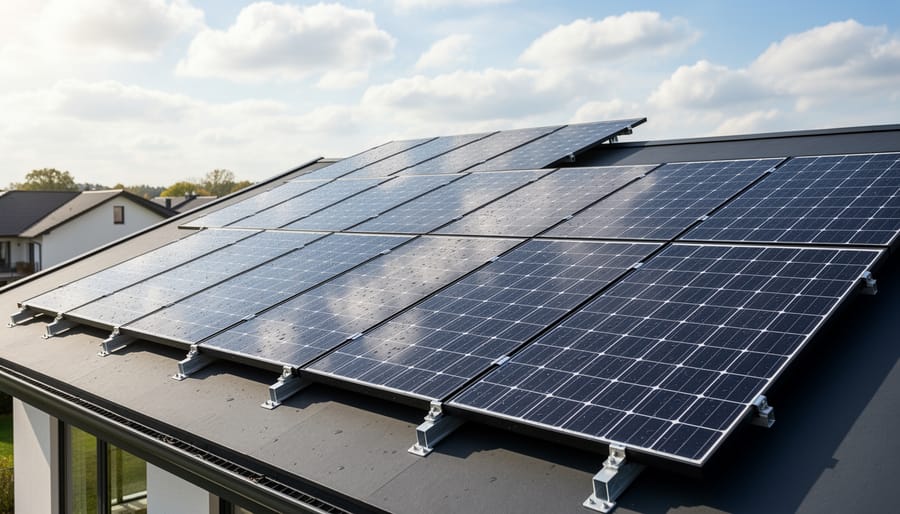
Solar panels degrade through four primary physical and chemical mechanisms that progressively reduce their energy conversion efficiency.
UV Exposure and Polymer Breakdown
Ultraviolet radiation continuously bombards the encapsulant materials, typically ethylene-vinyl acetate (EVA), that protect photovoltaic cells. Over years of exposure, UV photons break molecular bonds in these polymers, causing discoloration that reduces light transmission to the cells. This photodegradation can account for 0.2-0.5% annual efficiency loss in standard panels. The backsheet material faces similar UV attack, potentially developing microcracks that compromise moisture barriers.
Thermal Cycling Stress
Daily temperature fluctuations create expansion and contraction cycles in panel materials. Silicon cells, metal contacts, and encapsulants each expand at different rates, generating mechanical stress at their interfaces. After thousands of cycles, these stresses can cause solder bond fatigue, cell microcracks, and delamination where layers separate. Desert installations experiencing 40°C daily swings show accelerated degradation compared to moderate climates.
Moisture Ingress
Despite edge sealing, water vapor gradually penetrates panel assemblies through microscopic defects. Moisture catalyzes corrosion of electrical contacts, creates conductive pathways that increase leakage current, and accelerates encapsulant degradation. High-humidity environments present particular risk, with coastal installations requiring more robust moisture barriers.
Potential-Induced Degradation (PID)
High system voltages, common in utility-scale arrays, can drive ion migration between cells and the grounded aluminum frame. This voltage stress causes polarization effects that create shunting pathways, sometimes reducing output by 30% within years. PID primarily affects panels in negative-ground systems and intensifies in hot, humid conditions. Modern anti-PID coatings and circuit designs mitigate this effect, but older installations remain vulnerable.
These degradation processes operate simultaneously, with their combined impact determining actual field performance over decades.
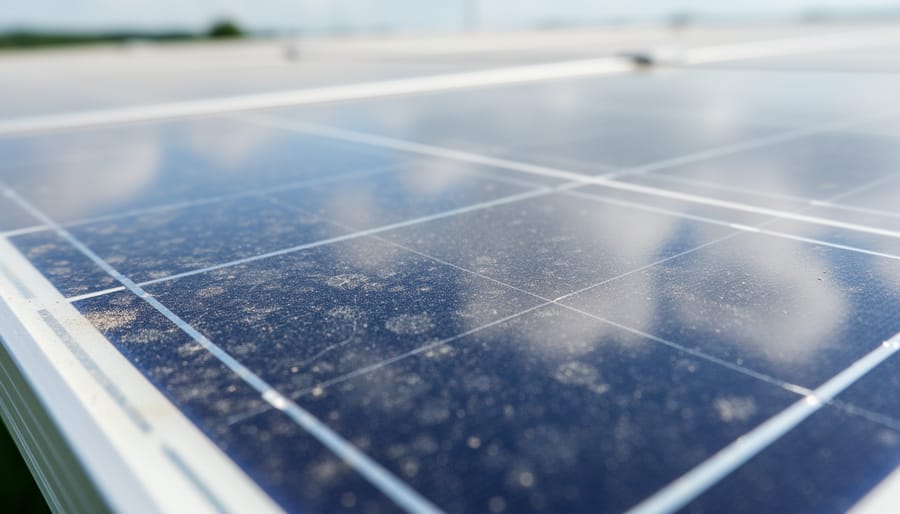
Environmental Stress Factors
Climate conditions play a decisive role in how quickly solar panels age. Panels installed in hot, arid regions with intense UV exposure, like Arizona or parts of Australia, face accelerated thermal stress that can increase degradation rates by 0.1-0.2% annually compared to temperate zones. High temperatures cause solder joints to expand and contract repeatedly, weakening electrical connections over time.
Coastal installations contend with salt-laden air that corrodes aluminum frames and junction boxes, potentially creating moisture entry points. Humidity compounds this effect: panels in tropical climates experience faster encapsulant breakdown as moisture penetrates protective layers, risking delamination and cell corrosion.
Snow and ice create mechanical stress through weight accumulation and freeze-thaw cycles. While most panels handle typical snow loads, regions with heavy accumulation may see micro-cracks develop in cells. Conversely, frequent hail in the American Midwest tests tempered glass durability, with larger hailstones occasionally causing surface damage that accelerates water ingress.
Wind matters too. Coastal or mountainous installations face sustained mechanical stress from high winds, loosening mounting hardware and creating vibration-induced micro-fractures. Desert regions add windblown dust and sand that scratch panel surfaces, reducing light transmission and creating hot spots.
Installation angle affects drainage and self-cleaning. Panels tilted less than 15 degrees accumulate dirt and organic growth faster, particularly in humid or polluted areas, reducing efficiency and potentially trapping moisture against the surface.
Types of Solar Panel Technologies and Their Lifespans
Monocrystalline Silicon Panels
Monocrystalline silicon panels represent the longest-lasting commercial solar technology available, with field data showing functional lifespans extending from 25 to 40 years under proper conditions. Their superior longevity stems from the manufacturing process: each cell originates from a single crystal structure, creating fewer grain boundaries where degradation typically initiates.
These panels exhibit degradation rates as low as 0.3% to 0.5% annually, meaning a high-quality monocrystalline system retains approximately 90% of its original capacity after 25 years. Premium manufacturers now offer performance warranties guaranteeing 92% output at year 25, with some extending coverage to 30 years.
The structural uniformity of monocrystalline silicon provides inherent resistance to potential-induced degradation and reduces vulnerability to microcracks from thermal cycling. Testing by photovoltaic research institutes confirms that well-manufactured monocrystalline panels frequently operate beyond their warranty period, with many installations from the 1990s still producing at 80% capacity in 2026.
However, actual lifespan depends heavily on manufacturing quality. Top-tier monocrystalline panels use higher-purity silicon and advanced encapsulation materials that significantly outperform budget alternatives, justifying their higher initial cost through extended operational life and better long-term return on investment.
Polycrystalline Silicon Panels
Polycrystalline silicon panels typically deliver reliable service for 25 to 35 years, with performance degradation rates averaging 0.6% to 0.8% annually. This slightly faster decline compared to monocrystalline technology stems from their manufacturing process, which creates multiple silicon crystals within each cell rather than a single uniform structure.
The multi-crystalline composition introduces more grain boundaries where defects can develop over time. These boundaries become sites where moisture ingress and thermal stress concentrate, accelerating material breakdown. Field studies from installations in the early 2000s show polycrystalline panels retaining approximately 80% of original output after 20 years, aligning with manufacturer warranty thresholds.
Despite higher degradation rates, polycrystalline panels remain cost-effective for installations where space isn’t constrained and upfront budget matters more than maximum efficiency. Their simpler production process reduces manufacturing defects that could compromise longevity, though the inherent crystal structure limits peak performance retention.
Modern polycrystalline panels incorporate improved anti-reflective coatings and robust encapsulation materials that have narrowed the durability gap with monocrystalline alternatives. Proper installation and regular maintenance extend lifespan toward the upper end of the 25-35 year range, particularly in moderate climates with less extreme temperature cycling.
Thin-Film and Emerging Technologies
Thin-film solar panels exhibit shorter lifespans than crystalline silicon alternatives, typically lasting 15-20 years before reaching the industry-standard 80% performance threshold. Cadmium telluride (CdTe) panels, the most commercially successful thin-film technology, degrade at approximately 0.5-1.0% annually under normal operating conditions. Their sealed construction provides some protection against moisture ingress, but the thinner absorber layers make them more susceptible to microcracks and delamination over time.
Copper indium gallium selenide (CIGS) panels demonstrate comparable durability to CdTe, with field studies showing 18-22 year lifespans. Environmental stress testing reveals that CIGS technology performs well in high-temperature environments but shows accelerated degradation in humid coastal climates where moisture penetration becomes problematic.
Bifacial panels represent a mature technology extending traditional crystalline lifespans rather than reducing them. These panels capture reflected light from both sides, and manufacturers report similar 25-30 year warranties to standard monocrystalline panels. The dual-sided design introduces additional encapsulation complexity, but field data from installations since 2015 confirms degradation rates below 0.5% annually.
Perovskite solar cells remain largely experimental despite laboratory efficiency breakthroughs. Current prototypes degrade within months when exposed to moisture and oxygen, with no commercial products offering meaningful warranty periods. Research institutions continue developing encapsulation techniques to achieve the multi-decade stability required for viable deployment.
Solar Inverter Lifespan and System Longevity
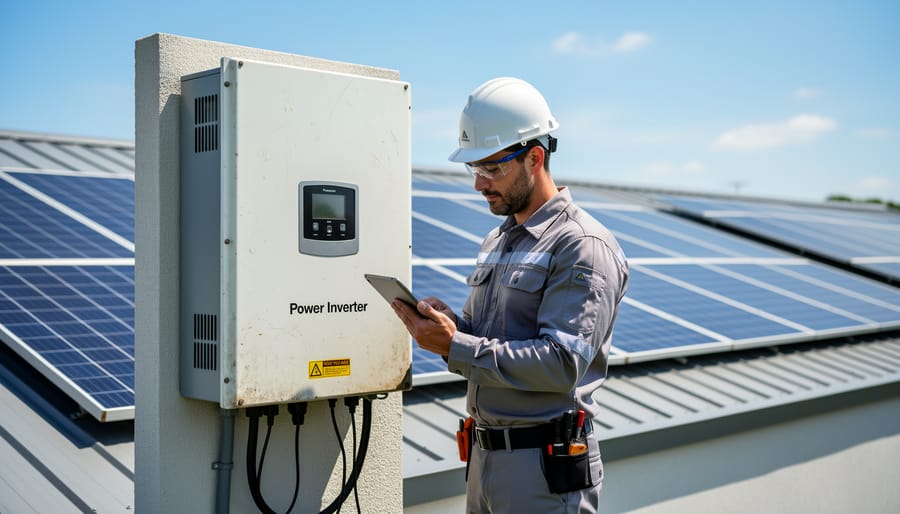
While solar panels maintain productive output for 25-30+ years, the inverter, the device that converts DC electricity from panels into usable AC power, typically requires replacement after 10-15 years. This discrepancy creates a critical planning consideration that many system owners overlook during initial installation.
String inverters, the most common type in residential installations, generally last 10-12 years before efficiency drops or failure occurs. Microinverters, attached to individual panels, often come with 20-25 year warranties but still represent the weakest link in system longevity compared to the panels themselves. The electronics inside inverters face constant thermal stress and higher operating temperatures than panels, accelerating component wear.
This lifespan gap means you’ll replace your inverter at least twice during your panels’ productive life. A system installed in 2026 with quality panels might still generate 80% of original capacity in 2056, but the original inverter will likely fail before 2040. Budgeting for this replacement, typically $1,000-$3,000 for residential string inverters, should factor into your total cost of ownership calculations.
Component coordination affects more than just budgets. An aging inverter operating at reduced efficiency can bottleneck an otherwise healthy panel array, wasting the electricity your panels generate. Monitoring inverter performance through the manufacturer’s app or monitoring system helps identify declining efficiency before complete failure occurs.
The relationship between panel degradation and inverter replacement creates an optimization opportunity. If your panels have degraded to 85% capacity after 12 years, replacing the inverter with a slightly smaller unit matched to current output can reduce costs while maintaining conversion efficiency. Conversely, if you replace panels early due to damage, upgrading to a more efficient inverter simultaneously maximizes the new panels’ performance.
Battery systems, increasingly common in solar installations, introduce another lifespan variable. Lithium-ion batteries typically last 10-15 years, aligning more closely with inverter replacement cycles than panel longevity. Coordinating battery and inverter replacement as a single upgrade event reduces installation costs and system downtime. Planning your solar investment requires accounting for these staggered replacement schedules rather than treating the system as a single 25-year component.
Factors That Extend or Reduce Panel Lifespan
Solar panels are engineered to withstand decades of outdoor exposure, but their actual lifespan depends on factors you can control and conditions beyond your influence. Understanding these variables helps you maximize your investment and set realistic expectations.
Installation quality ranks as the single most critical factor determining how long panels perform optimally. Proper mounting systems distribute wind loads evenly and prevent stress fractures. Panels installed at incorrect angles accumulate water and debris, accelerating corrosion of junction boxes and frame seals. Cable management matters too: exposed wiring degrades faster under UV exposure, while poorly crimped connections create resistance hotspots that damage cells. Professional installers who follow manufacturer specifications and local building codes typically deliver systems that reach or exceed rated lifespans.
Climate conditions create vastly different degradation patterns. Panels in consistently hot regions like Arizona experience faster thermal degradation, with silicon cells breaking down approximately 0.8% annually compared to 0.5% in temperate zones. Coastal installations face salt spray corrosion that attacks aluminum frames and mounting hardware. Conversely, areas with heavy snow loads can stress frames if installation doesn’t account for weight distribution. Hail poses immediate damage risk, though panels rated for 25mm hailstones at terminal velocity withstand most storms. Desert environments combine extreme heat with abrasive dust that gradually scratches anti-reflective coatings, reducing light transmission over time.
Several maintenance practices and design choices substantially impact longevity:
– Maintaining proper installation angle (typically 15-40 degrees) allows self-cleaning from rain and prevents standing water
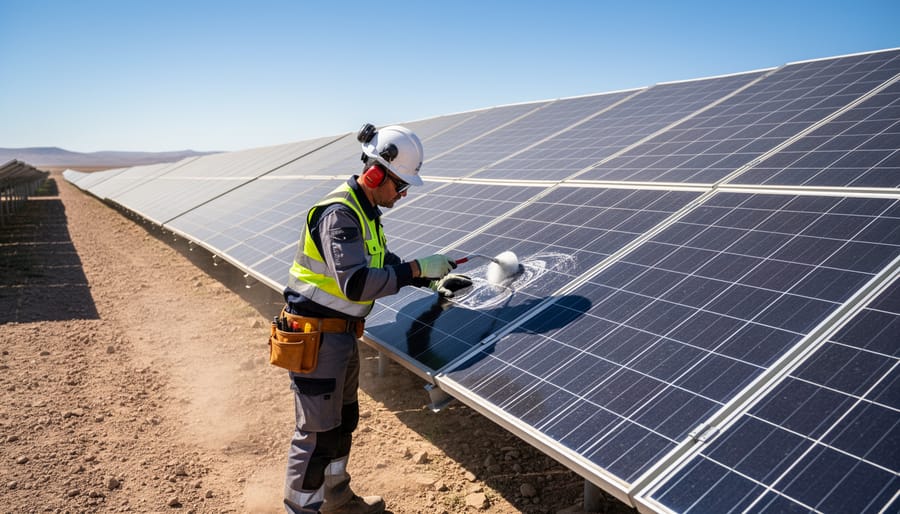
– Regular cleaning removes dust, pollen, and bird droppings that create shading hotspots and accelerate degradation
– Managing surrounding vegetation prevents branches from scratching surfaces and reduces moisture retention
– Using quality mounting systems with corrosion-resistant materials prevents structural stress and frame damage
– Implementing extreme weather protection like surge suppressors guards against lightning-induced failures
– Selecting panels from Tier 1 manufacturers ensures rigorous quality control and better material selection
Manufacturer quality determines both initial performance and degradation trajectory. Premium manufacturers use higher-purity silicon, better encapsulants, and more robust backsheet materials. Their panels typically degrade at 0.3-0.5% annually versus 0.7-1.0% for budget alternatives. This difference compounds: after 25 years, a premium panel might retain 88% efficiency while a budget panel drops to 75-80%.
Maintenance frequency affects outcomes more than most owners realize. Panels cleaned quarterly in dusty environments maintain 3-5% higher output than neglected counterparts. Annual electrical inspections catch failing connections before they create cascade failures. Monitoring systems that alert you to sudden performance drops enable early intervention, often preventing minor issues from shortening overall lifespan.
The interplay between these factors explains why identical panels show different aging patterns. A well-installed premium panel in coastal Oregon with regular maintenance easily exceeds 30 years, while a poorly mounted budget panel in Florida’s humidity might underperform its warranty within 20 years.
Real-World Applications and Performance Data
While manufacturers typically warranty panels for 25-30 years, decades of field data reveal many installations performing well beyond these projections. The longest-running solar installations provide concrete evidence of how panels age in real-world conditions versus controlled laboratory environments.
A landmark study tracking a 1982 rooftop installation in Switzerland found panels still operating at 79.5% of original capacity after 35 years, a degradation rate of 0.58% annually, better than the industry standard 0.8%. More significantly, researchers noted the degradation wasn’t linear; the panels stabilized after initial losses, suggesting effective lifespan extends further than early degradation curves predict.
Similar findings emerged from Australia’s CSIRO research examining panels installed in the 1990s across diverse climates. Coastal installations in humid, salt-laden environments showed 15-18% performance loss after 25 years, while arid inland sites measured just 10-12% degradation over the same period. The research team documented that panels meeting stringent quality standards during manufacturing consistently outperformed budget alternatives by 3-5 percentage points, translating to multiple additional years of viable electricity generation.
Field studies from the National Renewable Energy Laboratory analyzing thousands of installations across the United States between 2000-2010 identified average degradation rates of 0.5-0.6% for premium monocrystalline panels versus 0.8-1.0% for standard polycrystalline models. These rates suggest high-quality panels could maintain 80% efficiency at 40 years rather than the conservative 25-year estimates manufacturers provide.
Academic research from MIT’s Photovoltaic Research Laboratory revealed that 15% of surveyed installations from the 1980s remain grid-connected and economically productive in 2026, operating at 70-75% capacity. Their economic modeling showed these systems continue generating positive returns despite reduced output because installation costs were amortized decades ago.
Commercial solar farms provide additional validation. California’s first utility-scale arrays from the mid-2000s demonstrate 12-14% total degradation after 20 years of continuous operation, lower than anticipated. Operators report that proper inverter replacement and minimal maintenance kept systems viable, with expectations to operate profitably another 10-15 years.
The evidence consistently shows that quality panels in well-designed systems regularly exceed warranty periods, often remaining productive for 35-40 years when properly maintained.
Frequently Asked Questions
Understanding the practical aspects of solar panel lifespan raises several common questions for both residential users and commercial operators. These answers draw from industry data and real-world performance studies to help you make informed decisions about your solar investment.
Do solar panels stop working after 25 years?
No, solar panels do not stop working after 25 years. The 25-year warranty period reflects when panels typically retain around 80-85% of their original capacity, but they continue generating electricity well beyond this point, often producing usable power for 35-40 years or more.
When should I replace my solar panels?
Replace panels when their output drops below the threshold where energy production no longer justifies the space they occupy, typically when efficiency falls to 70-75% of original capacity. For most installations, this occurs after 30-35 years, though newer technologies may extend this timeline.
Can solar panel degradation be reversed?
Degradation from physical wear cannot be reversed, as it involves permanent changes to photovoltaic materials and cell structure. However, cleaning panels to remove dirt and debris, addressing shading issues, or fixing damaged components can restore some lost performance that resulted from external factors rather than inherent degradation.
How do I monitor degradation in my solar panels?
Monitor degradation by tracking monthly and annual energy production through your inverter monitoring system, comparing current output to baseline performance data adjusted for seasonal variations. Most modern systems provide real-time performance tracking, and annual professional inspections can identify accelerated degradation patterns.
What happens to solar panels at the end of their life?
End-of-life solar panels can be recycled to recover silicon, glass, aluminum frames, and other valuable materials, with specialized facilities recovering up to 95% of panel components. Many manufacturers now participate in take-back programs, and emerging regulations in various regions require proper recycling rather than landfill disposal.
Warranty coverage typically includes two distinct components that address different aspects of panel longevity. The performance warranty guarantees a minimum power output level over 25 years, usually promising at least 80-85% of original rated capacity. The product warranty, lasting 10-15 years for most manufacturers, covers defects in materials and workmanship but does not protect against normal degradation. Understanding this distinction helps set realistic expectations for what warranty claims can address.
Replacement timing becomes a financial calculation rather than a fixed deadline. When panels still produce 75% of their original output after 30 years, they may continue serving effectively in applications where space is not a constraint. Some operators choose to augment aging arrays with additional panels rather than complete replacement, extending system life while boosting total capacity. The decision depends on energy needs, available roof or ground space, and whether newer high-efficiency panels would deliver better returns per square meter than keeping older but still-functional units in service.
Types or components
A complete solar installation comprises several interconnected components, each with distinct lifespans that collectively determine system longevity. The photovoltaic panels themselves form the primary energy generation layer, typically lasting 25-30+ years. However, panels depend on supporting components that require different replacement schedules.
The inverter converts DC electricity from panels into usable AC power. String inverters generally need replacement after 10-15 years, while microinverters often last 20-25 years. This lifespan disparity means most systems require at least one inverter replacement during the panels’ operational life.
Mounting hardware and racking systems, constructed from aluminum or galvanized steel, typically outlast the panels when properly installed, often remaining functional for 40+ years. The electrical wiring, junction boxes, and connectors usually match panel longevity if quality materials are used and connections remain sealed from moisture.
Monitoring systems and charge controllers (in off-grid setups) have shorter lifespans of 10-15 years, similar to inverters. Understanding these component lifespans allows for accurate long-term budgeting and prevents system downtime through proactive replacement scheduling.
uses
Knowing solar panel lifespan serves several critical purposes in the solar energy ecosystem. Financial planners and project developers use lifespan data to calculate accurate return on investment timelines and levelized cost of energy, ensuring solar projects remain economically viable over decades. System designers rely on degradation rates to properly size installations, accounting for anticipated performance decline when determining panel quantity and configuration.
Maintenance teams apply lifespan knowledge to establish inspection schedules and predict component replacement needs, particularly coordinating panel monitoring with inverter replacement cycles. Insurance providers and asset managers use longevity data to assess risk and determine coverage terms for large-scale solar installations. Homeowners benefit by setting realistic expectations for their investment, planning for eventual system upgrades, and understanding when performance monitoring might indicate issues versus normal aging.
Research institutions utilize long-term lifespan studies to validate new materials and manufacturing techniques, driving improvements in panel durability. Environmental assessments incorporate lifespan data when calculating the total lifecycle carbon footprint and sustainability metrics of solar installations, demonstrating that longer-lasting panels provide superior environmental benefits per unit manufactured.
Modern solar panels deliver remarkable longevity, with most systems performing reliably for 25 to 30 years and many extending well beyond these benchmarks. This durability stems from gradual degradation rather than abrupt failure, panels typically lose only 0.5% to 1% of their efficiency annually, meaning a quality installation can still generate 80% to 90% of its original output after three decades.
Effective system planning requires viewing solar panel lifespan alongside component interdependencies. While panels endure for 25-plus years, inverters generally need replacement after 10 to 15 years. Budgeting for this differential ensures continuous operation and maximizes return on investment. The degradation mechanisms discussed, from UV exposure and thermal cycling to moisture ingress, highlight why installation quality, climate conditions, and routine maintenance significantly influence real-world performance beyond manufacturer specifications.
Technological advances in 2026 continue improving panel durability. Enhanced encapsulation materials, anti-reflective coatings, and superior junction box designs are pushing degradation rates below 0.4% annually in premium products. Emerging bifacial and heterojunction technologies show promise for even longer service lives, while improved monitoring systems help owners track performance trends and optimize maintenance schedules.
Understanding solar panel lifespan empowers informed decisions about system design, financial projections, and long-term energy planning. With proper installation and care, today’s solar investments represent decades of clean energy production, making them among the most durable and sustainable technologies available for renewable power generation.